HumanLayer
Manages tasks, sessions and worktrees while exposing agent work and shared artifacts. Primarily an execution and coordination layer.
Official HumanLayer overview →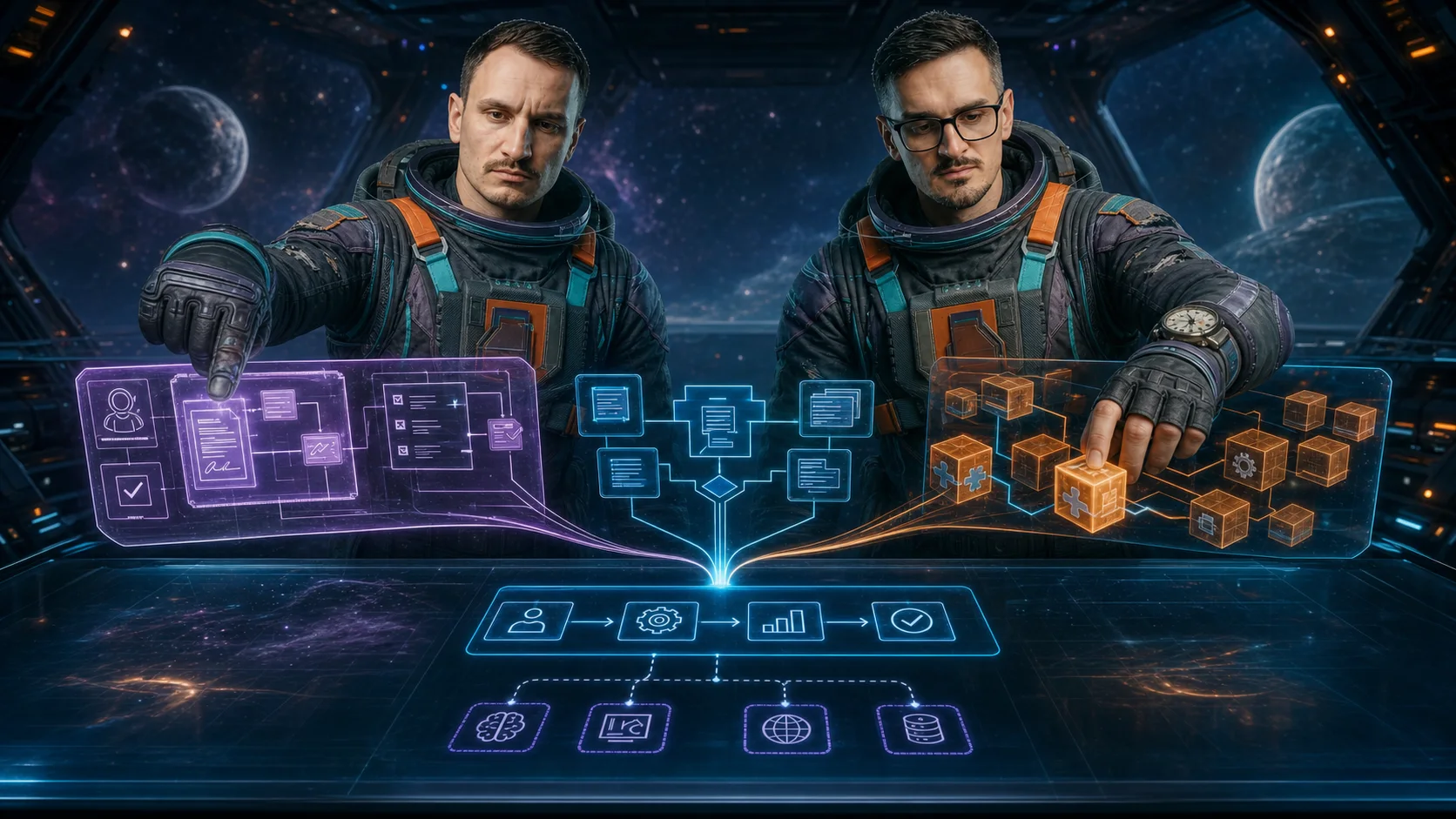
The Hub explains the method. 10x-cli installs it. 10xBench helps select a model.
10X WORKFLOW // SYSTEM COMPARISON
10x Workflow is an original, maintained agent workflow. It combines lightweight spec-driven development, parallel-work control and ready project context with our quality, legacy, teamwork and controlled-autonomy techniques.
Each of these systems solves a different part of AI-native development, so we start with categories rather than features.
Manages tasks, sessions and worktrees while exposing agent work and shared artifacts. Primarily an execution and coordination layer.
Official HumanLayer overview →Helps people and agents agree before code through proposal, specs, design and tasks. A lightweight intent and specification layer.
Official OpenSpec documentation →A CRM/ERP foundation with context, documentation, guardrails and agent conventions. A domain product and application framework, not a generic change workflow.
Official OpenMercato overview →A portable process from scope and research through plan, implementation, review and archive, extended with quality, legacy, teamwork and Scale Tier.
See the Core Skills Chain →“Combines the strengths” means a synthesis of patterns, not code use or partnership. 10x Workflow maintains its own canon, artifacts and verification mechanisms.
The main difference is responsibility width. 10x Workflow has one simple core for everyday changes, with extra skills for harder classes of work.
| AREA | HumanLayer | OpenSpec | OpenMercato | 10x Workflow |
|---|---|---|---|---|
| Primary role | Execution orchestration | Specification agreement | Domain foundation | Full change cycle |
| Repository research | Sessions and workspace | Explore before the spec | Ready framework context | Evidence, map and deep focus |
| Artifacts | Design docs and task state | Proposal / specs / design / tasks | Specs, ADRs and conventions | Change / research / plan / review / archive |
| Quality | Visibility and supervision | Spec validation | Framework guardrails | Risk, deliberate-break and layered gates |
| Legacy | Complex codebase work | Change specification | Not the primary goal | Churn, hot spots and reversible refactoring |
| Team | Collaboration and integrations | Team plan review | Framework conventions | PR review and Shared AI Registry |
| Autonomy | Multiple sessions and worktrees | Artifact flow | Agent in a prepared architecture | /goal, /loop, isolation and hard STOP |
| Stack portability | Multiple providers | 25+ AI tools | OpenMercato stack | Stack-independent workflow |
Most changes need the same base: a clear scope, research, plan, implementation, review and closure. We do not add process weight until risk justifies it.
No workflow can guarantee an outcome regardless of adoption, repository quality and team discipline. 10x Workflow is designed so the cost and effect of agent work become visible in the process.
the system raises the chance of positive ROI through less context rediscovery, less rework and earlier detection of bad decisions, while showing the team where the gain actually comes from.
Open the Core Skills Chain and inspect every stage: input, artifact, mechanism, gate and boundaries. That is how to judge whether the system fits your repository.
OPEN THE CORE SKILLS CHAIN →NO RESULTS // TRY ANOTHER QUERY